

Lucky Dreams casino Plinko game
Introduction
Plinko at Lucky dreams casino is one of those rare Lucky Dreams Casino games details for players checking risk and value that looks almost self-explanatory at first glance and still manages to surprise people once they actually start playing. I have seen this happen many times: a player opens the page, notices a ball dropping through a field of pegs, assumes it is little more than a visual gimmick, and then realizes that the entire appeal comes from the tension between simplicity on the screen and uncertainty in the result.
That contrast is exactly why Lucky dreams casino Plinko deserves a closer look. This is not a classic online slot with reels, paylines, bonus rounds, and themed symbols. It is also not a table game built around fixed strategic choices. Plinko strips the experience down to a few visible variables: stake size, board setup, number of rows, and risk level. Yet those few inputs can change the rhythm of a session dramatically.
For Canadian players in particular, Plinko often stands out because it is easy to understand without being shallow. You do not need to learn hand rankings, Lucky Dreams Casino roulette before making a deposit sectors, or bonus-buy logic. But that does not mean the game is simplistic in practice. The real experience depends on how the ball distribution works, how multipliers are arranged across the board, and how often a player is willing to chase higher outcomes at the cost of long dry stretches.
In this article, I will focus strictly on the Plinko experience at Lucky dreams casino: what the game is, how its mechanics work, what creates its pace, where the real risk sits, and who is likely to enjoy it. The goal is practical clarity. Before launching a round, a player should understand not only what Plinko looks like, but what it actually feels like over a real session.
What Plinko Is and Why It Draws So Much Attention
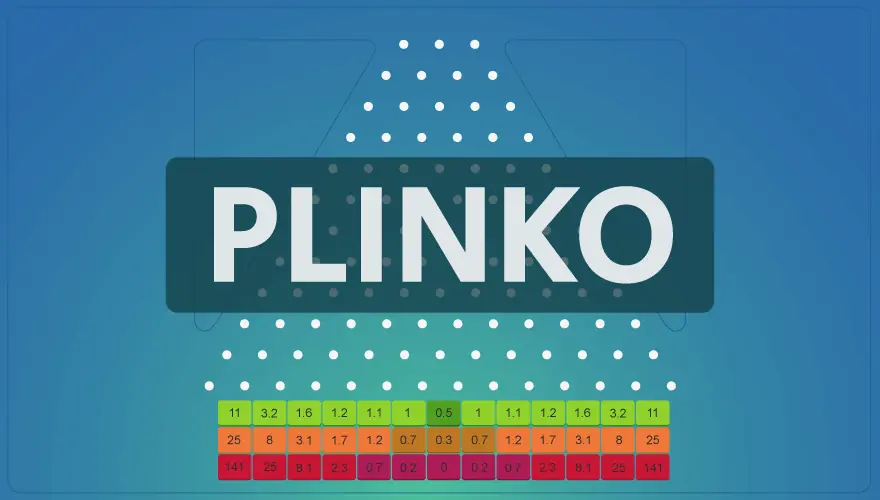
Plinko is a drop-based casino game built around a very direct idea. The player releases a ball from the top of a vertical board filled with pegs. As the ball descends, it bounces left and right in a semi-random path until it lands in one of several slots at the bottom. Each bottom slot carries a multiplier, and that multiplier determines the return for that round.
That is the whole visible concept. No reels. No card values. No complicated interface. And yet it attracts attention for several reasons.
First, the outcome is easy to follow with your eyes. In many casino games, the result is delivered all at once. In Plinko, there is a short journey between the moment of release and the result. That tiny delay matters. It creates suspense without needing cinematic animations or oversized presentation. Players are not just waiting for a number; they are watching the path unfold.
Second, the board itself tells a story. In most versions of Plinko, the highest multipliers sit near the outer edges, while the center slots usually pay lower but more frequent returns. This layout instantly communicates a familiar trade-off: the biggest prizes are available, but they are harder to hit. Even without reading a paytable, a player can sense that the attractive numbers are not meant to land often.
Third, the game has become noticeable because it fits modern online play habits. Sessions can be fast. Decisions are minimal. The result cycle is short. At the same time, the visual path of each drop gives enough friction to make the action feel more involved than pressing spin on an ultra-fast slot. That balance is one reason Plinko has built such a strong identity on many platforms, including Lucky dreams casino.
One observation I find important: Plinko often feels more “honest” to players than some heavily themed casino products, because the board openly shows where the high multipliers are and how difficult they seem to reach. Of course, the math still sits behind the interface, but the tension is visible rather than hidden behind symbols and feature triggers.
How the Plinko Mechanics Actually Work
To understand Lucky dreams casino Plinko properly, it helps to separate the visible mechanic from the underlying logic. On the surface, you drop a ball and watch it bounce. Underneath, the game runs on a probability model that determines how likely different landing zones are over time.
In practical terms, a standard Plinko session usually involves several adjustable elements:
Bet size — the amount risked per drop.
Risk level — often low, medium, or high, affecting multiplier distribution.
Rows — the depth of the board, which changes the ball path and result spread.
Drop frequency — whether the player releases one ball at a time or uses a faster sequence.
The ball appears to move peg by peg in a random left-right pattern. From the player’s point of view, that path is the experience. But from a mathematical point of view, the key issue is not the animation itself. The key issue is distribution. Most Plinko boards are structured so that central outcomes occur more often than edge outcomes. That is why middle multipliers tend to be common and extreme payouts remain rare.
The number of rows matters because it changes the number of directional decisions on the way down. More rows generally mean more possible paths and a broader spread of outcomes. This does not automatically mean better returns. It means the board can produce a different shape of volatility, with more room between common results and rare top-end hits.
Risk level is where the experience can change most sharply. A lower-risk setting usually compresses the payout model. You tend to see more modest returns and fewer dramatic swings. A higher-risk setting typically pushes more value toward the edges, making top multipliers more attractive on paper but less frequent in reality. This is where many new players misread the game: they see the bigger numbers and assume the session will become more exciting in a positive sense, when in practice it often becomes harsher, drier, and more punishing between standout drops.
| Element | What It Changes | What It Means in Practice |
|---|---|---|
| Bet size | Monetary exposure per drop | Even short sessions can become expensive if the pace is high |
| Rows | Path depth and result spread | Can make outcomes feel more varied and less predictable |
| Low risk | Flatter multiplier distribution | Usually steadier sessions with fewer extreme results |
| High risk | More aggressive multiplier layout | Higher upside, but long stretches of weak returns are more likely |
A useful way to think about Plinko is this: the animation shows the path, but the session is defined by the payout map. If a player ignores the multiplier structure and focuses only on the visual bounce, they miss the part that actually controls bankroll pressure.
Why the Game Feels Engaging and How Its Pace Works
Plinko creates engagement through a very specific kind of timing. It is faster than most table games in terms of decision load, but it does not feel as mechanically repetitive as turbo slot spinning. Each drop is short, though not instant. That brief descent gives the brain something to track. It is a tiny suspense loop repeated over and over.
At Lucky dreams casino, this matters because the appeal of Plinko is not just about possible multipliers. It is also about rhythm. The game has a stop-start pulse: choose settings, release the ball, watch the path, casino registration checklist the result, repeat. That pulse can become surprisingly absorbing.
There are three reasons the tempo works so well:
Visual anticipation — the ball appears to remain “alive” until it reaches the bottom. Before you make a deposit, it is worth reading Trustpilot ratings guide at Lucky Dreams Casino for players who compare casino offers for the fee and speed details.
Short result cycle — outcomes arrive quickly enough to keep momentum.
Adjustable tension — changing rows or risk can make the same game feel calmer or much sharper.
One memorable feature of Plinko is that near-misses feel unusually vivid. When a ball bounces close to a high multiplier and then falls back toward a lower-paying center slot, the moment is easy to remember. In a slot, near-misses are often abstract. In Plinko, they are spatial. You can literally see how close the ball came to the edge. That visual closeness can make the session feel more dramatic than the raw numbers alone would suggest.
This is also where caution is needed. Because each round is so easy to process, players can underestimate how quickly repeated drops accumulate. A game that feels lightweight can still produce heavy spending if the stake is too high or the pace becomes automatic. Plinko often looks casual right up until the balance starts moving faster than expected.
How Risky Plinko Really Is and Who It Suits Best
Plinko can be relatively mild or highly aggressive depending on the chosen setup. That is why broad statements like “Plinko is a safe option” or “Plinko is extremely volatile” are both incomplete. The game does not have one single personality. It changes character based on configuration.
In lower-risk modes, the experience is often more controlled. You may see frequent small returns, occasional modest multipliers, and fewer brutal swings. This can suit players who want a straightforward casino game with visible randomness but without the layered complexity of slots.
In higher-risk modes, the balance shifts. The top-end multipliers become the headline, but the path to them is rougher. Sessions can include many ordinary or weak results before a standout hit appears. Some players enjoy this because the chase is transparent. Others find it frustrating because the board keeps reminding them where the big numbers are without landing there often enough to justify the pressure.
As a practical category, I would say Plinko is best suited to:
players who like short, direct rounds;
people who prefer visible randomness over themed bonus systems;
users who want control over session tone through risk settings;
those comfortable with the idea that many rounds may produce modest outcomes.
It may be a weaker fit for:
players who want narrative features, free spins, or progression;
those who expect strategic decision-making beyond setup choices;
anyone who gets impatient during streaks of low multipliers;
users who chase large returns without accepting how rare they can be.
A second observation worth remembering: Plinko is one of the few casino formats where a player can feel both in control and completely exposed at the same time. You choose the risk setting, rows, and stake, which creates a sense of agency. But once the ball drops, there is nothing to do except watch probability play out.
What Players Should Understand About Probabilities and Session Outcomes
Before trying Lucky dreams casino Plinko, it is important to understand that the game is built around uneven probability distribution. The board is not neutral in the everyday sense of the word. It is structured so that some landing areas are naturally more common than others.
Most versions of Plinko behave roughly like a bell-shaped distribution. The center receives more traffic over time, while the outer slots are rarer. Because high multipliers are commonly placed near the edges, their rarity is part of the design. This is not a flaw. It is the central logic of the game.
What does that mean in a real session?
It means a player should not judge the game by a few dramatic drops seen in clips or streams. Over a longer sample, the experience is usually defined by many average outcomes and only occasional standout hits. The more aggressive the risk setting, the more visible that contrast becomes.
It also means that “almost reaching” a high multiplier has no value. This sounds obvious, but it matters psychologically. Because the ball travels visibly across the board, players can become attached to the path. The game encourages emotional reading of movement. Mathematically, however, only the final slot counts.
Here is a practical breakdown of how the session can feel under different approaches:
| Session Style | Likely Feel | Main Trade-Off |
|---|---|---|
| Lower risk, smaller stake | More stable and easier to extend | Less chance of headline multipliers |
| Higher risk, smaller stake | More swing-heavy but still manageable | Frequent weak rounds between notable hits |
| Higher risk, larger stake | Fast pressure and strong emotional swings | Bankroll can shrink quickly |
If I had to give one practical rule, it would be this: treat Plinko as a probability-driven drop game, not as a “hot streak” game. Chasing a result because the board “looks ready” is one of the easiest ways to misread what is happening.
How Plinko Differs from Slots and Other Casino Games
Plinko sits in an unusual place among online casino games. It shares some DNA with slots because it is fast, luck-driven, and built around repeated wagers. But the player experience is very different.
In a classic slot, the appeal often comes from layers: symbols, paylines, wilds, scatters, free spins, bonus rounds, and themed presentation. The outcome is usually delivered through a reel stop sequence, and much of the excitement is tied to combinations and feature triggers.
Plinko removes almost all of that. There are no reels to interpret and usually no expanding rule set during the session. The tension comes from trajectory and landing position. In other words, a slot asks, “What combination appeared?” Plinko asks, “Where did the ball finish?”
Compared with roulette, Plinko is less about choosing among many betting options and more about configuring one probability environment. Compared with blackjack, it offers no skill-based edge through decision quality. Compared with crash-style products, it is less about timing a cash-out and more about accepting a fully resolved random result.
This makes Plinko distinctive in several ways:
the interface is simpler than most slots;
the suspense is visual rather than symbolic;
player input is front-loaded into setup choices;
the emotional effect comes from path and placement, not feature buildup.
For some players, that is a strength. For others, it can feel too bare. If someone enjoys discovering bonus structures and layered slot design, Plinko may seem repetitive after a while. If someone prefers clean, readable action, it can feel refreshingly direct.
Practical Strengths and Weak Points of Lucky dreams casino Plinko
When I assess Plinko as a product rather than as a trend, I see a game with a very clear identity. It does a few things well, and it does not pretend to offer more than it does. That honesty is useful, but it also reveals the format’s limits.
Main strengths:
Immediate clarity. A new player can understand the objective within seconds.
Strong visual tension. Watching the ball descend creates real suspense despite the simple design.
Configurable experience. Risk levels and board depth can noticeably change session feel.
Fast feedback. The result cycle is short, which suits players who dislike long build-up.
Main limitations:
Limited strategic depth. Once settings are chosen, there is little to influence.
Repetition risk. Without features or progression, some players may lose interest quickly.
Misleading sense of simplicity. The interface is easy, but bankroll swings can still be sharp.
High-risk modes can be harsh. The biggest multipliers attract attention, but the road to them can be expensive.
A third observation that often gets overlooked: Plinko is one of the cleanest examples of a casino game where entertainment value depends heavily on self-discipline. Because the rules are so easy and the rounds are so short, the player has fewer natural pauses. In slots, bonus rounds and feature breaks at least change the pattern. In Plinko, the repetition is smooth enough that it can blur session awareness if the player is not paying attention.
What to Check Before Launching a Plinko Session
Before starting Plinko at Lucky dreams casino, I would recommend looking at the setup with more care than many players expect. The game is easy to enter, but that is exactly why small choices matter.
Check the risk level first. Do not select high risk just because the top multiplier looks attractive. Decide whether you are comfortable with longer stretches of ordinary outcomes.
Match the stake to the tempo. A bet that seems small in isolation may become large in aggregate if you plan many drops.
Understand the role of rows. More rows can reshape the feel of the board and the spread of results. Do not treat this as a cosmetic option.
Use demo mode if available. This is one of the few games where a short trial can genuinely help you understand the session rhythm before real-money play.
Set a session boundary. Plinko is at its best when played with clear limits, because the pace encourages repetition.
If Luckydreams Lucky Dreams Casino bonus offers details for players checking risk and value several versions or providers for Plinko, it is worth comparing them briefly rather than assuming they feel identical. Small differences in layout, speed, multiplier spread, and interface can change the practical experience more than many players expect.
What matters most is entering the session with the right expectation. Plinko is not there to deliver constant dramatic returns. It is there to provide a clean, probability-driven loop where tension comes from each drop and value comes from how well the chosen setup matches the player’s tolerance for swings.
Final Verdict
Lucky dreams casino Plinko offers a very specific kind of casino experience: fast, readable, visually tense, and built around a simple action that hides a meaningful amount of mathematical depth. That is its core strength. The game does not need reels, storylines, or layered bonus systems to hold attention. It relies on trajectory, multiplier placement, and the constant question of where the ball will finish.
For the right player, that works extremely well. Plinko suits people who want direct action, short rounds, and a clear connection between setup choices and session feel. It can also appeal to players who are tired of feature-heavy slots and prefer something more stripped back. Anyone stuck on account verification can follow the steps laid out in bingo for Canadian players.
At the same time, caution is necessary. The game’s simplicity can create false comfort. High-risk settings are not just “more exciting”; they can be significantly more punishing. Fast repetition can also make spending accelerate quietly if the stake is not controlled.
My overall view is straightforward: Plinko at Lucky dreams casino is worth trying if you want a transparent, pace-driven casino game where the suspense is visible on every round. Its strongest qualities are clarity, rhythm, and adjustable intensity. Its weak points are limited depth beyond the core loop and the potential for sharp swings, especially when players overestimate how often the top multipliers land.
So, is it worth playing? Yes, if you understand what it really offers. Plinko is not a replacement for every casino format, and it will not suit everyone. But for players who appreciate clean design, immediate tension, and a game where the risk profile is easy to see even when the outcome is not, it remains one of the more interesting options on the page.
FAQ
What is Plinko on Lucky Dreams and how does the ball drop work?
Plinko sends a ball from the launcher down through pegs and into numbered slots. Each landing slot maps to a multiplier that affects your payout. The result updates immediately after the ball settles.
Before launching a real-money Plinko round, what should be checked on the screen?
Confirm the stake and any visible limits for the current mode. Check that multipliers are displayed for the possible landing slots. Also make sure the balance shown matches the account you used for casino login.
Can Plinko be played in mobile casino app or only on the mobile site?
Lucky Dreams supports mobile play, whether through the casino website on a phone or the mobile casino app if available on the device. The core controls remain the same: place the stake and launch the ball. For the smoothest experience, use a stable connection.
A player receives a message about an inactive or expired bonus effect. What should be done for Plinko?
Check the bonus code or promo settings for status and whether it applies to the current game mode. Some promo offers may only work on real-money play and only within specific wagering rules. If the message persists, contacting support helps confirm the exact eligibility for Plinko rounds.
Are there any practical rules for managing stakes and volatility in Plinko sessions?
Set a session limit before playing and avoid increasing stake after a losing streak. Watch for stake changes on the panel if multiple betting buttons are shown. Taking short breaks can help keep decisions consistent during higher-volatility moments.
How should current balance and wagering be checked when a pending withdrawal exists?
A pending withdrawal can affect available funds and the amount that can be wagered. Verify the balance and available amount shown in the cashier or account view. If the status delays gameplay balance updates, support can confirm what the account allows while processing.